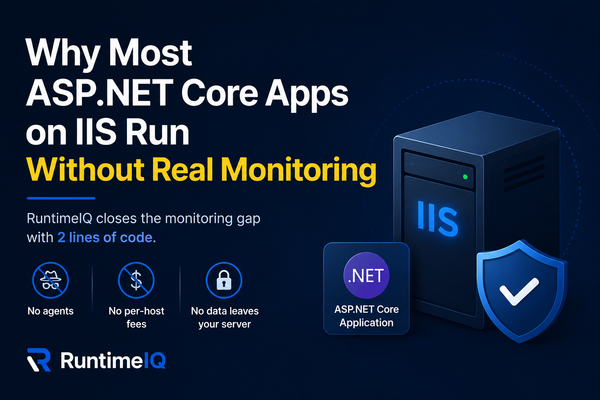

runtimeiq Why Most ASP.NET Core Apps on IIS Run Without Real Monitoring Most ASP.NET Core apps on IIS have no real monitoring. Not because teams don't care, but because traditional APM tool is priced for large server setups or sends data to an external server. RuntimeIQ fixes this with two lines of code, no per-host fee, no data leaving your server.
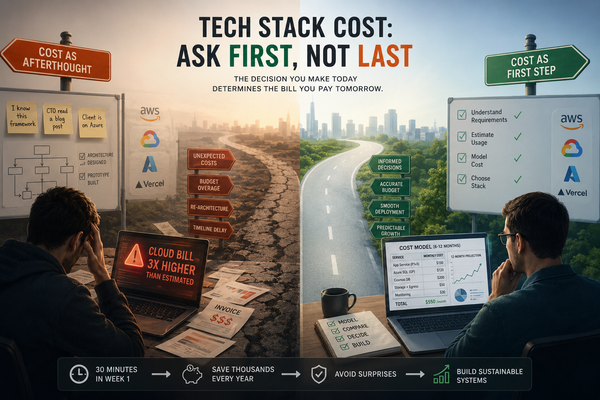
Azure Know Your Production Hosting Cost Before You Choose Your Tech Stack Nobody checks the pricing page until the bill lands. By then, the architecture is locked, the budget is blown, and the uncomfortable conversation with finance is already scheduled.
Featured Why I Started The True Code of Production Systems Series Most tutorials teach you how to build software. Very few teach you what happens after. This series is about the mindset, questions, and decisions that separate software that just works from software that keeps working.
Featured Why I Started The True Code of a Complete Engineer Series Twenty years in tech taught me that the engineers who get trusted in the room are not always the most technically sharp. This is what actually separates them. Real lessons from real teams, real decisions, and real careers.
LeadrEye Why I Finally Stopped Tracking My Engineering Team in Excel and What I Did Instead Engineering team management shouldn't require maintaining Excel sheets alongside Jira. Why most leads end up with this dual-tool pattern, what specifically breaks in Jira for team visibility, and the solution that eliminated my daily spreadsheet ritual.
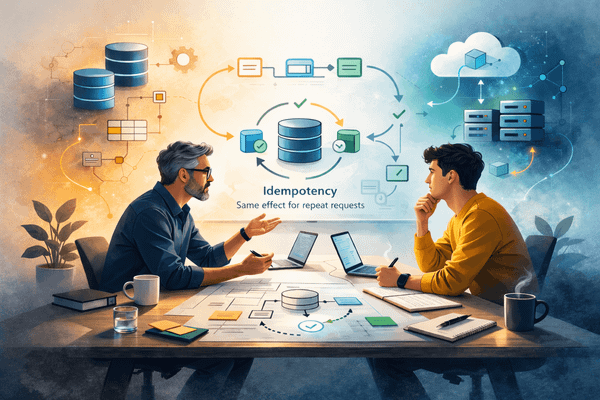
Idempotency Is Not an API Thing: A Conversation Between Two Engineers A conversation between a senior and a junior engineer on what idempotency really is, beyond REST APIs, across SQL jobs, console apps, Azure Functions, message queues, and any operation that can run more than once. Clear, end to end.
Featured Designing an Azure Web App: A Conversation That Went Longer Than Planned A detailed conversation between a senior architect and a junior architect on designing a production-ready Azure web app — where database pressure, latency, security boundaries, and observability are worked through in real time.
Tech Communication From Code to Communication: How Your Career Hinges on What You Write, Not Just What You Build Code builds systems. Words build trust. This article dives into the silent skill every developer underestimates. From emails to status updates to design docs, see how your writing shapes outcomes, clears chaos — and moves your career forward.
5 Critical Things to Check if You Want to Optimize the Performance of an Existing System Performance issues are not always about writing better code or throwing more hardware at the problem. Often, the bottlenecks lie hidden in plain sight — inside your database queries, system logs, data flows, or architectural decisions. If you're looking to optimize the performance of an existing system, not a
Why Communication Breakdown — Not Infra — Is the Real Root Cause of System Failures Most teams design the system… but not how the system communicates. This article breaks down why that gap creates chaos in logs, support, and fixes—and how system-level communication must be architected like any other core component.
Featured Why On-Call-Friendly Systems Are the Real Measure of Good Architecture Most systems look great when everything is running fine. But architecture isn’t truly tested when things are working. It’s tested at 2:13 a.m. when something breaks. And someone gets paged. In that moment, one thing becomes painfully clear: Is the system on-call friendly, or not?
The Only 10 Questions Developers Need to Ask in Requirement Discussions In every project, developers rush to code — but overlook the questions that shape the code. This article uncovers 10 razor-sharp questions every developer must ask during requirement discussions — with real-world examples across microservices, cloud, AI, and CI/CD.