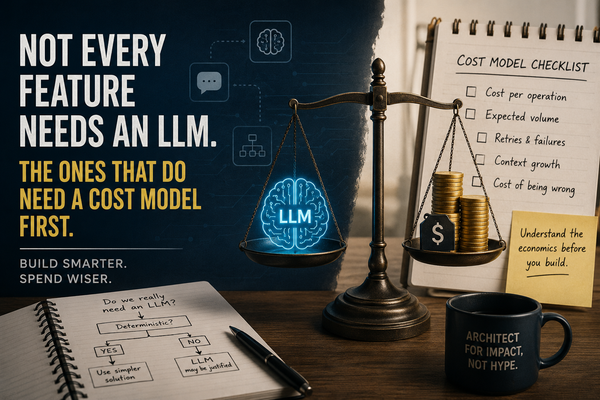
The True Code Of Production Systems Not Every Feature Needs an LLM. The Ones That Do Need a Cost Model First. An LLM can make a feature smarter, but it can also make a simple feature unexpectedly expensive. Before adding a model, understand the real cost per operation, production volume, retries, context growth, and the cost of getting it wrong.
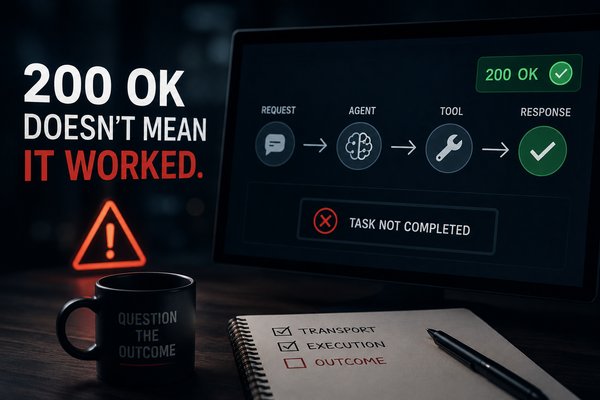
The True Code Of Production Systems Your AI Agent Returned a 200. That Doesn't Mean It Worked. An AI agent can return a 200, execute every tool call, and still fail the user. Traditional observability tells you whether the system is healthy. Production agents demand something more: proof that the task was actually done right.
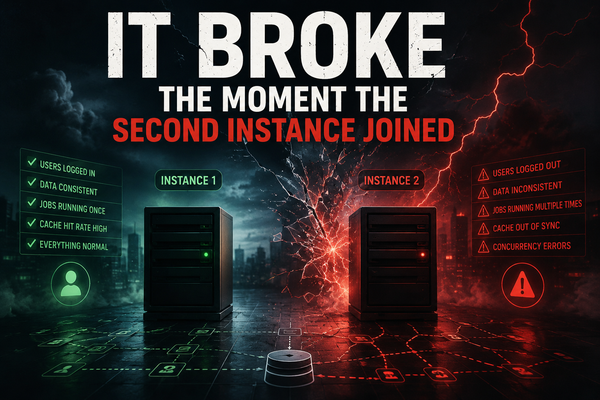
The True Code Of Production Systems It Broke the Moment the Second Server Joined Four months in production, zero incidents. Then traffic tripled, auto-scaling fired, and a second instance came online at 11:14 PM. By 11:17 the support queue had forty tickets. No code changed. No deployment happened. The only difference: there were now two of everything instead of one.
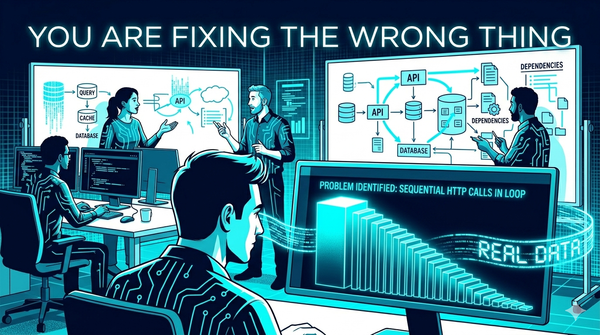
The True Code Of Production Systems You Are Fixing the Wrong Thing Performance problems do not start in production. They start in a codebase nobody was measuring. By the time the team is investigating, they are already three days into theories that have nothing to do with the actual answer.
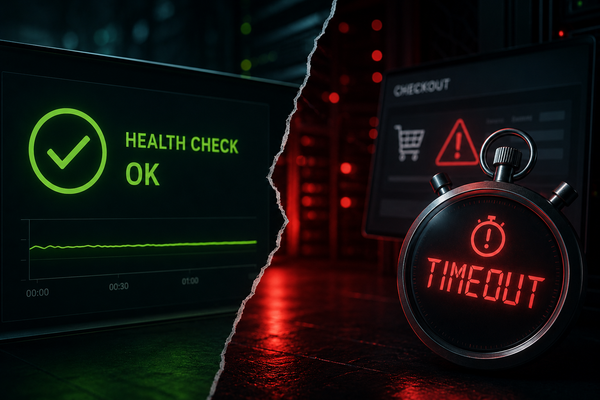
The True Code Of Production Systems Featured Your Production Health Checks Are Lying to You The dashboard was green. The alerts were quiet. Every service showed up. And for forty minutes, the checkout page was silently broken. Most health checks confirm the process is alive. They say nothing about whether it can actually handle requests.
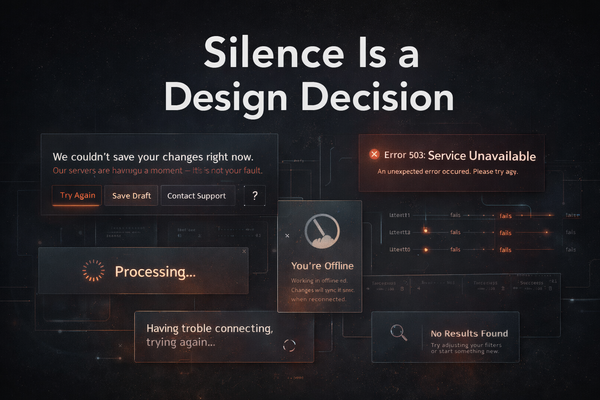
The True Code Of Production Systems Silence Is a Design Decision What users see when your system fails, slows, or goes offline is not polish. It is production design.
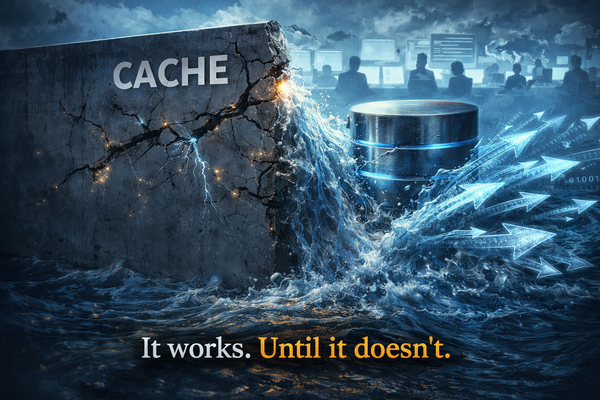
The True Code Of Production Systems Caching Is Easy. Production Caching Is Not. Part of the series — The True Code of Production Systems