AI for Dotnet Engineers Models, Tokens, Context, and Temperature: What You Actually Must Know The next step in learning AI with .NET isn't more code, it's understanding what's actually happening under the hood. Models, tokens, context, caching, temperature: five ideas that quietly control every AI bill and every AI response, made visible in this chapter.
AI for Dotnet Engineers How a .NET Engineer Actually Calls an AI Model In Chapter 1, AI helped you write code. In this one, your code talks to AI directly, and it turns out that's just an API integration you already know how to build. We wire Claude into a real .NET endpoint, wrap it in DI, and go parameter by parameter on what actually matters and why.
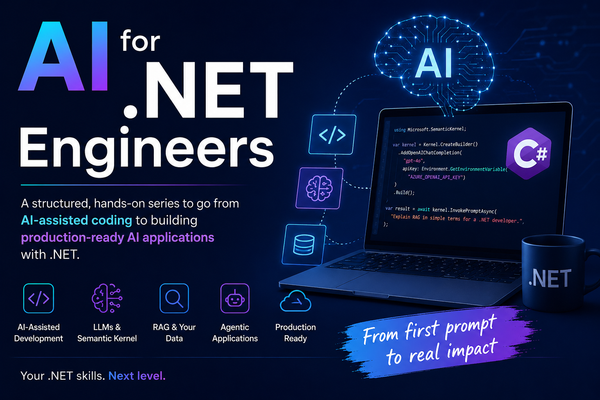
Featured AI for .NET Engineers A highly structured, hands-on path for .NET engineers to learn and build with AI, using the skills they already have.
AI for Dotnet Engineers How a .NET Engineer Actually Starts with AI Every second LinkedIn post is about AI agents and RAG pipelines, and some quiet part of you is wondering if you're falling behind. But you're not starting from zero. Here's where an experienced .NET engineer actually starts with AI.
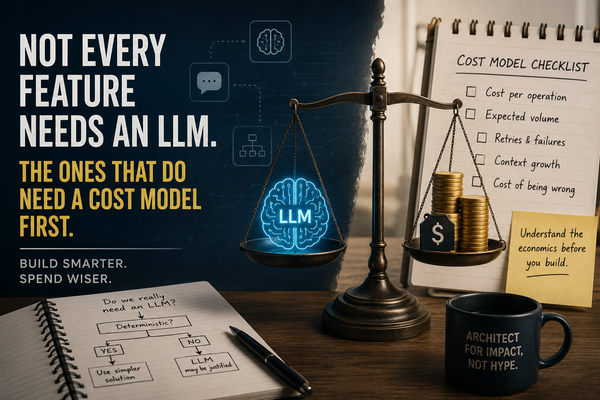
The True Code Of Production Systems Not Every Feature Needs an LLM. The Ones That Do Need a Cost Model First. An LLM can make a feature smarter, but it can also make a simple feature unexpectedly expensive. Before adding a model, understand the real cost per operation, production volume, retries, context growth, and the cost of getting it wrong.
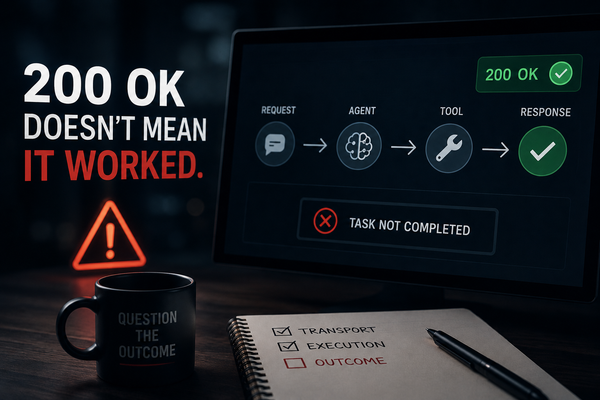
The True Code Of Production Systems Your AI Agent Returned a 200. That Doesn't Mean It Worked. An AI agent can return a 200, execute every tool call, and still fail the user. Traditional observability tells you whether the system is healthy. Production agents demand something more: proof that the task was actually done right.
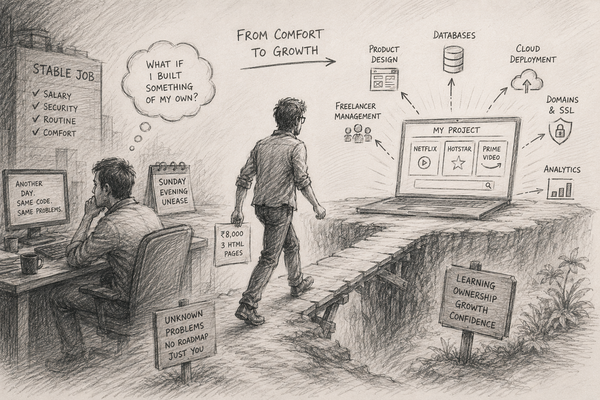
The True Code Of A Complete Engineer I Accidentally Found the Best Career Accelerator in Tech A stable job kept me comfortable. A simple OTT side project taught me more about ownership and growth than years of routine work did.
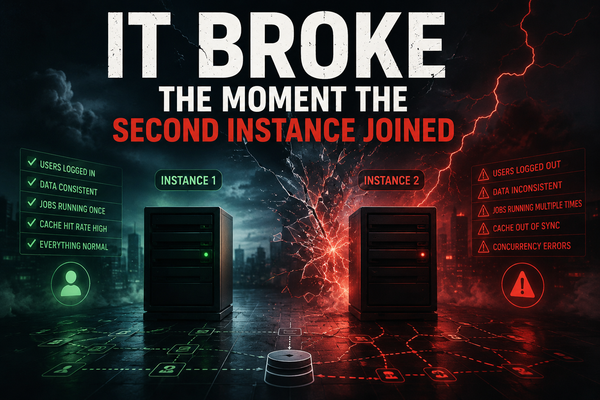
The True Code Of Production Systems It Broke the Moment the Second Server Joined Four months in production, zero incidents. Then traffic tripled, auto-scaling fired, and a second instance came online at 11:14 PM. By 11:17 the support queue had forty tickets. No code changed. No deployment happened. The only difference: there were now two of everything instead of one.
Featured Why I Started The True Code of a Complete Engineer Series Twenty years in tech taught me that the engineers who get trusted in the room are not always the most technically sharp. This is what actually separates them. Real lessons from real teams, real decisions, and real careers.
Featured Why I Started The True Code of Production Systems Series Most tutorials teach you how to build software. Very few teach you what happens after. This series is about the mindset, questions, and decisions that separate software that just works from software that keeps working.
runtimeiq Why Most ASP.NET Core Apps on IIS Run Without Real Monitoring Most ASP.NET Core apps on IIS have no real monitoring. Not because teams don't care, but because traditional APM tool is priced for large server setups or sends data to an external server. RuntimeIQ fixes this with two lines of code, no per-host fee, no data leaving your server.
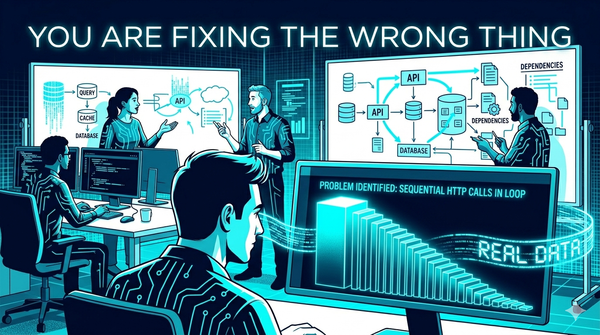
The True Code Of Production Systems You Are Fixing the Wrong Thing Performance problems do not start in production. They start in a codebase nobody was measuring. By the time the team is investigating, they are already three days into theories that have nothing to do with the actual answer.
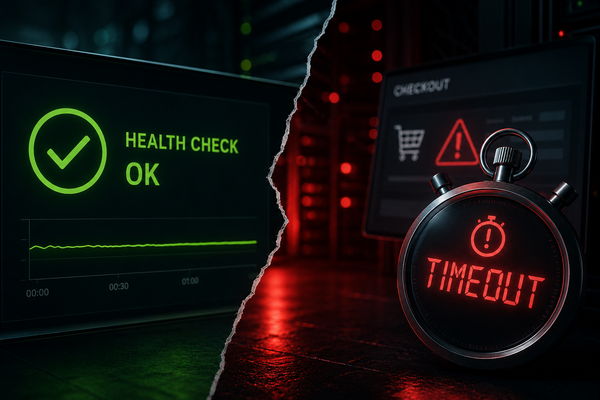
The True Code Of Production Systems Featured Your Production Health Checks Are Lying to You The dashboard was green. The alerts were quiet. Every service showed up. And for forty minutes, the checkout page was silently broken. Most health checks confirm the process is alive. They say nothing about whether it can actually handle requests.
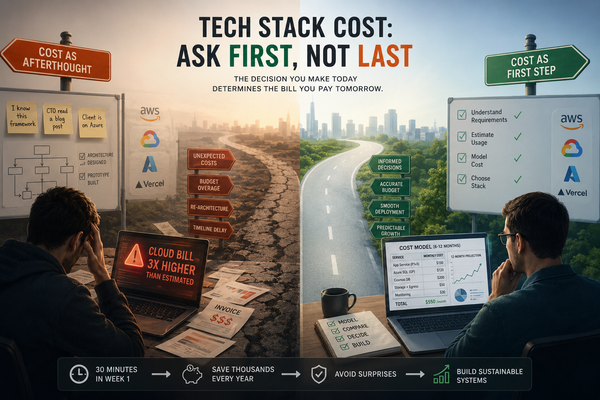
Azure Know Your Production Hosting Cost Before You Choose Your Tech Stack Nobody checks the pricing page until the bill lands. By then, the architecture is locked, the budget is blown, and the uncomfortable conversation with finance is already scheduled.
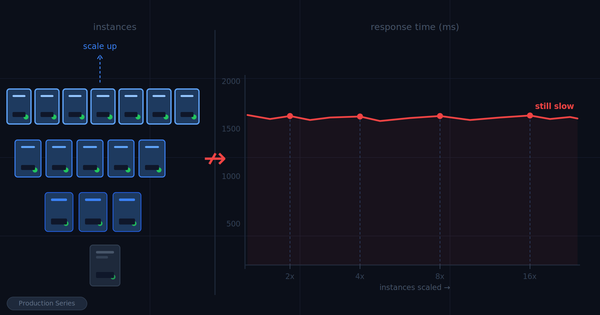
The True Code Of Production Systems Scaling the Application: Not an Answer to Every Performance Issue This is part of The True Code of Production Systems. The series is about the decisions that only become visible when something breaks in production. The traffic spike arrived at 11:47 on a Tuesday morning. It was not unexpected. The marketing team had sent a campaign email to two
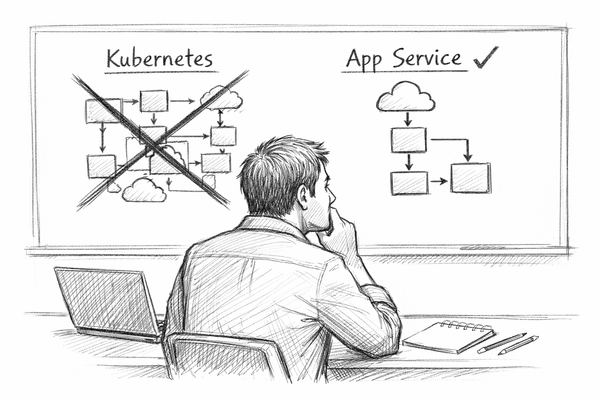
The True Code Of A Complete Engineer We Chose Kubernetes Because It Was the Right Technology. And that Was the Wrong Reason. We chose Kubernetes because it was the right technology. We were asking the wrong question. Eight engineers, one internal system, and months of hidden costs that never appeared on any invoice. Here is what that taught us about technology decisions.
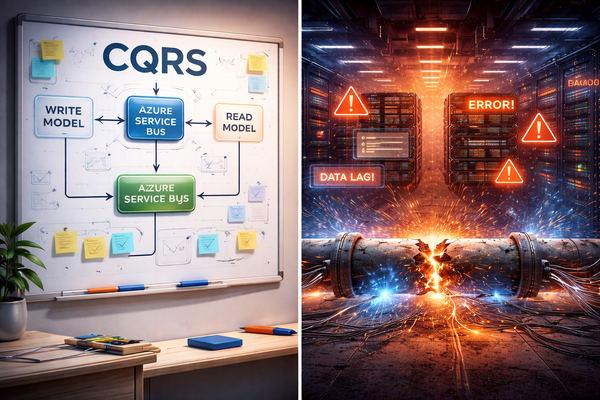
The True Code Of Production Systems CQRS Simplified the Design. It Complicated Production. CQRS simplifies design but complicates production. Eventual consistency, read model lag, and failing event pipelines create stale data and hidden failures. What looks clean in architecture reviews often breaks under real-world load.
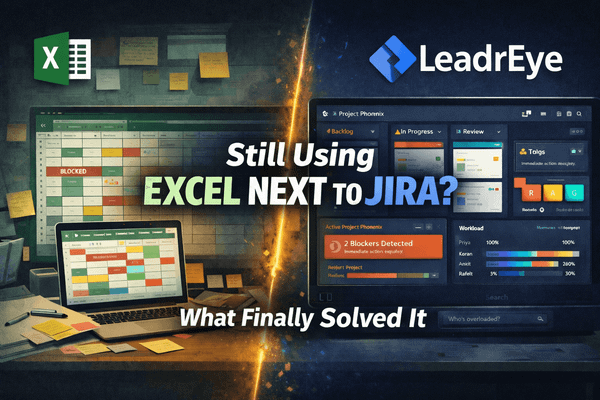
LeadrEye Why I Finally Stopped Tracking My Engineering Team in Excel and What I Did Instead Engineering team management shouldn't require maintaining Excel sheets alongside Jira. Why most leads end up with this dual-tool pattern, what specifically breaks in Jira for team visibility, and the solution that eliminated my daily spreadsheet ritual.
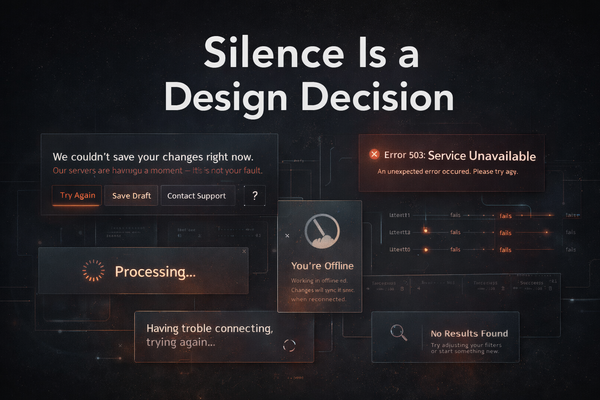
The True Code Of Production Systems Silence Is a Design Decision What users see when your system fails, slows, or goes offline is not polish. It is production design.
The True Code Of Production Systems Caching Is Easy. Production Caching Is Not. Part of the series — The True Code of Production Systems
The True Code Of A Complete Engineer You're Not Junior. You Just Don't Have the Words. A blog series by Gaurav Sharma: The True Code of a Complete Engineer. Lessons I wish someone had told me 20 years ago.
The True Code Of A Complete Engineer The First Thing You Should Do in a Production Incident Is Not What You Think When a production incident hits, the instinct is to fix it immediately. I once acted on that instinct during a data issue in production and ended up making the incident worse before we understood what was actually broken. Part of the series: The True Code of a Complete Engineer.
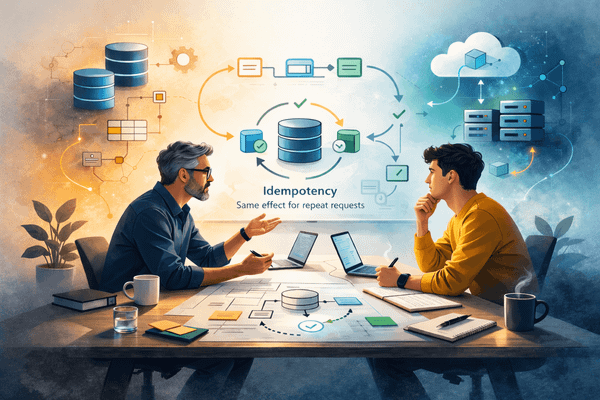
Idempotency Is Not an API Thing: A Conversation Between Two Engineers A conversation between a senior and a junior engineer on what idempotency really is, beyond REST APIs, across SQL jobs, console apps, Azure Functions, message queues, and any operation that can run more than once. Clear, end to end.
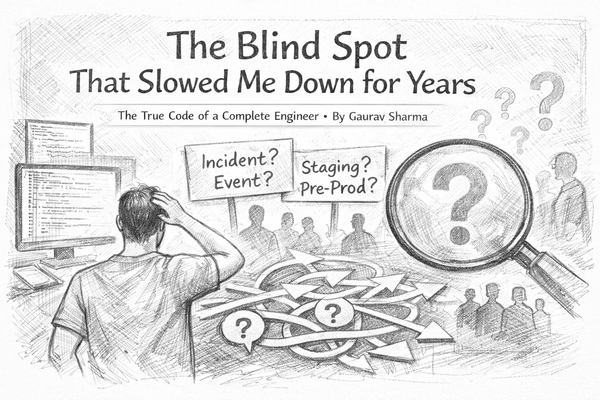
The True Code Of A Complete Engineer The Blind Spot That Slowed Me Down for Years A blog series by Gaurav Sharma: The True Code of a Complete Engineer — lessons I wish someone had told me 20 years ago.
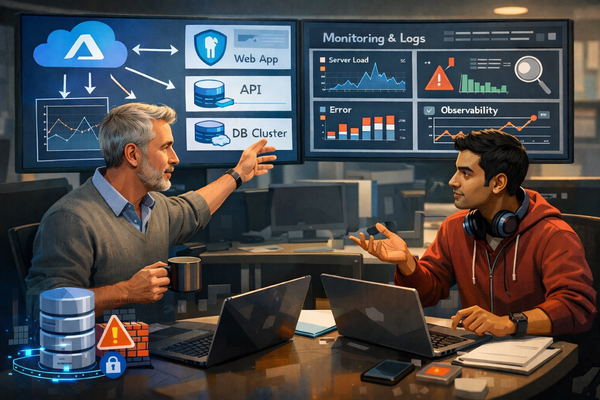
Featured Designing an Azure Web App: A Conversation That Went Longer Than Planned A detailed conversation between a senior architect and a junior architect on designing a production-ready Azure web app — where database pressure, latency, security boundaries, and observability are worked through in real time.